Quick Answer
An AC that runs but won't cool is usually caused by a dirty air filter, a frozen evaporator coil, low refrigerant from a leak, a clogged outdoor condenser coil, or a failing capacitor or compressor. Start by checking the thermostat, filter, and breakers; if it's still warm, have a technician diagnose it.
In this article
When it's pushing the mid-90s outside with the kind of thick, soupy humidity we get around Glenwood, an air conditioner that runs but won't cool isn't just annoying. It's miserable. If your system is humming along, the fan is blowing, and the house keeps creeping warmer, the good news is that the cause is usually one of a handful of common problems. Some you can check yourself in a few minutes. Others need a tech.
Here's the rundown, ordered roughly from the easy stuff you can look at first to the things that call for a professional. Work through it top to bottom.
First, the easy checks (thermostat, filter, breakers)
Before you assume the worst, rule out the simple stuff. A surprising number of "my AC won't cool" calls come down to something basic.
- Thermostat: Make sure it's set to COOL (not just "fan"), the target temperature is actually below the room temperature, and the batteries aren't dead. If the fan setting is on ON instead of AUTO, the blower runs even when the system isn't cooling, which can fool you into thinking it's running but blowing warm.
- Breakers: An AC system usually has two power sources, one for the indoor air handler and one for the outdoor unit. A tripped breaker on the outdoor unit means the indoor fan keeps blowing room-temperature air while nothing actually gets cooled. Check your panel and reset a tripped breaker once. If it trips again right away, stop and call, because something is drawing too much current.
- Air filter: A clogged filter is the single most common reason a system underperforms. We'll come back to this in a second.
- Vents and registers: Make sure supply vents are open and not blocked by furniture or rugs, and that return grilles aren't covered.
Key takeaway: Roughly half the "no cool" situations we see start with the thermostat, a breaker, or a filter. Check those before anything else.
A dirty or clogged air filter
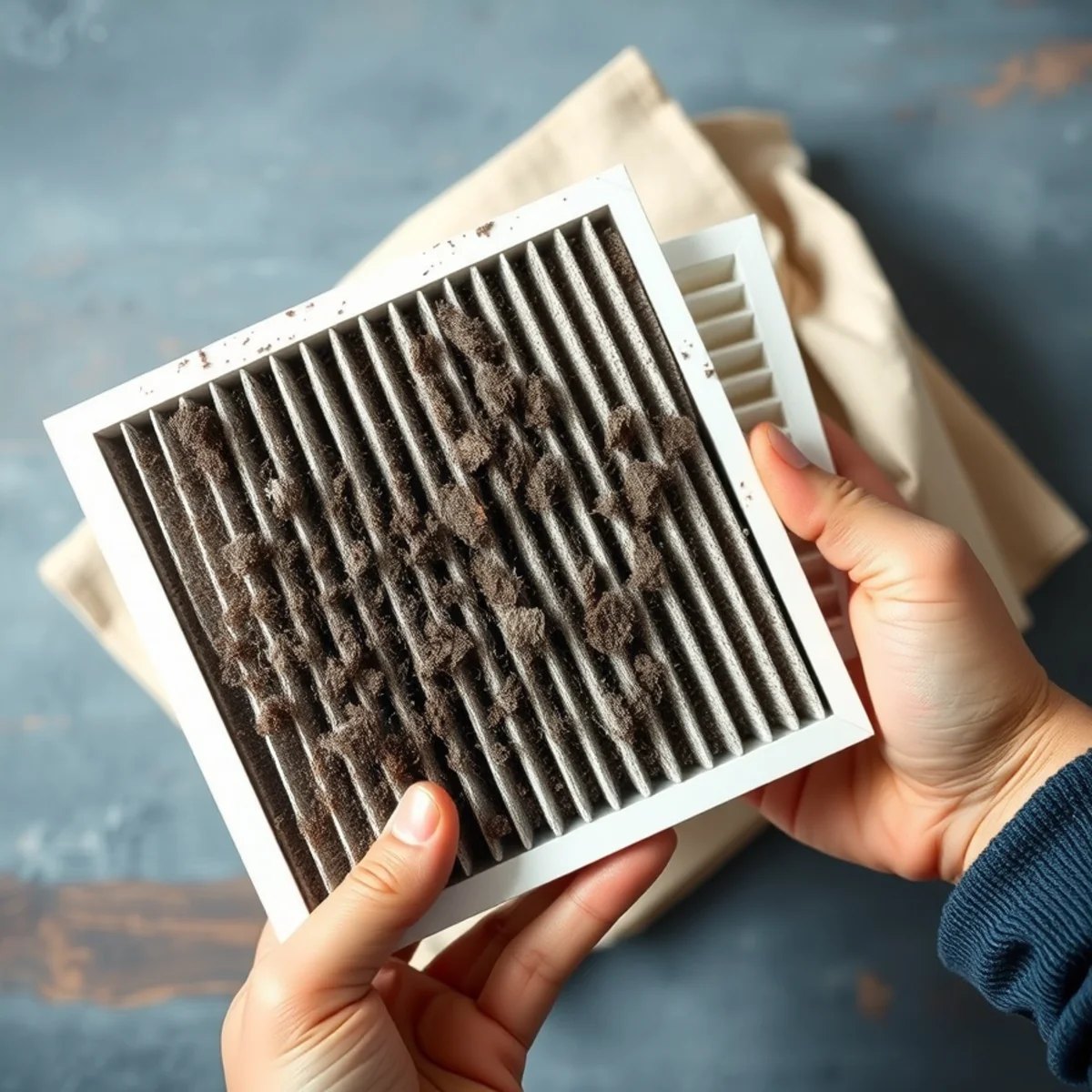
If you only check one thing, check the filter. Air conditioning works by pulling warm indoor air across a cold coil. When the filter is caked with dust, pet hair, and the heavy tree pollen we get from mid-February through May, airflow drops. Less air across the coil means less heat removed, so the air coming out of your vents feels weak and lukewarm even though the system is straining.
A restricted filter doesn't just hurt comfort. It can lead straight to the next problem on this list, a frozen coil, because low airflow lets the coil get too cold.
What to do: Pull the filter and hold it up to a light. If you can't see light through it, replace it. During our long cooling season, plan on checking it monthly. Homes with pets, dusty crawlspaces, or anyone running through pollen season should expect to change filters more often. It's the cheapest insurance there is for keeping your AC repair in Glenwood, AR calls to a minimum.
A frozen evaporator coil
This one catches a lot of folks off guard: your AC can actually freeze solid in the middle of a 95-degree afternoon. The evaporator coil, the cold coil inside your air handler, can ice over when airflow is too low (dirty filter, blocked vents, failing blower) or when refrigerant is low. Once a sheet of ice forms on the coil, it blocks airflow even further, the cooling drops off a cliff, and you may notice water pooling around the indoor unit as it slowly melts.
Signs you've got a frozen coil:
- Warm or barely-cool air from the vents while the system runs
- Visible ice or frost on the refrigerant lines or the coil
- Water or dampness around the indoor unit
- A hissing or bubbling sound near the air handler
If you see ice, shut the system off at the thermostat. Running a frozen unit strains the compressor, the most expensive part in the whole system, and you risk turning a minor repair into a major one. Switch the thermostat fan to ON (cooling OFF) to help the coil thaw faster, and give it a few hours. If it freezes up again after thawing, the underlying cause, airflow or refrigerant, still needs to be fixed.
Coil iced over? Shut it off and call before it gets worse. Call or text Brooks at (327) 210-5999 - Killian's is open 24/7, and a quick conversation can keep a small problem from becoming a compressor replacement.
Low refrigerant or a leak
Refrigerant is the stuff that actually carries heat out of your home. Here's the part people get wrong: an AC doesn't "use up" refrigerant the way a car uses oil. The system is sealed. So if it's low, you almost always have a leak somewhere, and that's why the air feels warm and the system runs and runs without satisfying the thermostat.
Low refrigerant also tends to cause that frozen coil we just talked about, so the two problems often show up together.
A few important points:
- Don't try to "recharge" it yourself. Topping off refrigerant without finding and sealing the leak just sends money out the same hole, and an overcharge or the wrong charge can damage the compressor.
- It's regulated work. Handling refrigerant requires proper certification and recovery equipment. This is genuinely a call-a-tech job.
- A proper repair means finding the leak, fixing it, then recharging to the manufacturer's spec, not just adding more and hoping.
If your system is older, the type of refrigerant it uses can also affect whether a repair makes sense or whether you're better off planning a replacement down the road.
A dirty outdoor condenser coil
Walk outside to your condenser, the big unit with the fan on top. Its job is to dump the heat from inside your house into the outdoor air, and it can only do that if air flows freely through the coil fins wrapped around it. Out here, those fins collect grass clippings, cottonwood fluff, dust off gravel drives, and leaves, especially on properties tucked into the Ouachita tree line or near the Caddo River.
When that outdoor coil is choked with debris, the system can't reject heat efficiently. The result is an AC that runs constantly, struggles to cool, and runs up your power bill while doing it.
What you can safely do: With the unit powered off at the disconnect, gently rinse the coil from the inside out with a garden hose (never a pressure washer, which bends the delicate fins). Clear leaves and grass away, and keep at least a couple of feet of clearance around the whole unit. Don't bend or poke at the fins.
A deeper cleaning, checking the fan motor, and verifying the system is rejecting heat properly is part of a routine tune-up. Staying on top of that is one of the simplest ways to lower your cooling bills during our hot Arkansas summers.
Failing capacitor, compressor, or blower motor
If the easy checks come up empty, the trouble may be electrical or mechanical, and now we're firmly in tech territory.
- Capacitor: The capacitor gives the compressor and fan motors the jolt they need to start and keep running. Capacitors are a common failure point in our heat, since high temperatures are hard on them. A bad capacitor can leave the outdoor fan not spinning, or the compressor humming but not starting. You might hear a clicking or buzzing.
- Compressor: This is the heart of the system. If the compressor isn't running, refrigerant doesn't circulate and you get warm air, even though the indoor fan is blowing fine. Compressor problems are serious and expensive, which is exactly why running a frozen or overheating system is such a bad idea.
- Blower motor: Inside, the blower pushes cooled air through your ducts. A weak or failing blower means little to no air at the registers, and what does come out isn't doing much.
These aren't DIY repairs. Diagnosing a capacitor, compressor, or motor involves live electrical testing and refrigerant readings that need the right tools and training.
When humidity is the real problem
Sometimes the thermostat reads a reasonable number but the house still feels hot, sticky, and clammy. That's a humidity problem, and it's especially common here given our high dew points and ~58 inches of rain a year.
An air conditioner is supposed to do two jobs at once: lower the temperature and wring moisture out of the air. When a system is oversized for the home or short-cycling (kicking on and off too quickly), it cools the air fast and shuts off before it ever pulls out enough moisture. You end up with a house that's technically "cool" but feels swampy. Older lumber-mill-era frame homes with vented crawlspaces add to the moisture load from below, too.
The fixes here vary: it might be a sizing issue, an airflow issue, or a system that's turning on and off too often. A right-sized system running longer, steadier cycles is what keeps both the temperature and the humidity comfortable. If your home cools but never feels dry, that's worth having looked at.
When to call a tech instead of guessing
Here's an honest line in the sand. Call Killian's Heat & Air when:
- You've checked the thermostat, filter, breakers, and outdoor unit, and it's still warm
- You see ice on the coil or lines, or the system keeps freezing up
- You suspect low refrigerant (the system runs nonstop and won't cool)
- The outdoor fan won't spin, or you hear clicking, buzzing, or humming with no cooling
- A breaker trips repeatedly
- The house cools but stays sticky and uncomfortable
We're a genuine Glenwood and Pike County operation, not a Hot Springs dispatch, so when your AC quits during a heat wave, you're talking to people who live in the same weather you do. You can read more about our coverage on our Glenwood, AR service area page. On the hottest days, a unit left struggling can damage itself, so it's better to shut it down and call than to keep guessing.
Killian's has been keeping homes cool around here for more than 32 years, family-owned and operated by Brooks Killian and his team, License #0852404. We try to repair before recommending replacement, and we'll tell you straight what's going on.
Still hot and not sure why? Don't sweat it out. Call or text Brooks at (327) 210-5999 - we're Open 24 Hours with 24/7 emergency service, including nights and weekends. For a same-day no-cool call or anything that can't wait, our emergency HVAC repair crew is ready to roll, or you can Request Service and we'll get you back to comfortable.
By the Killian's Heat & Air team
Reviewed by owner Brooks Killian, who has serviced and installed central heating and air across Glenwood and Pike County for 32+ years (Licensed AR HVAC #0852404). Meet the team.