Quick Answer
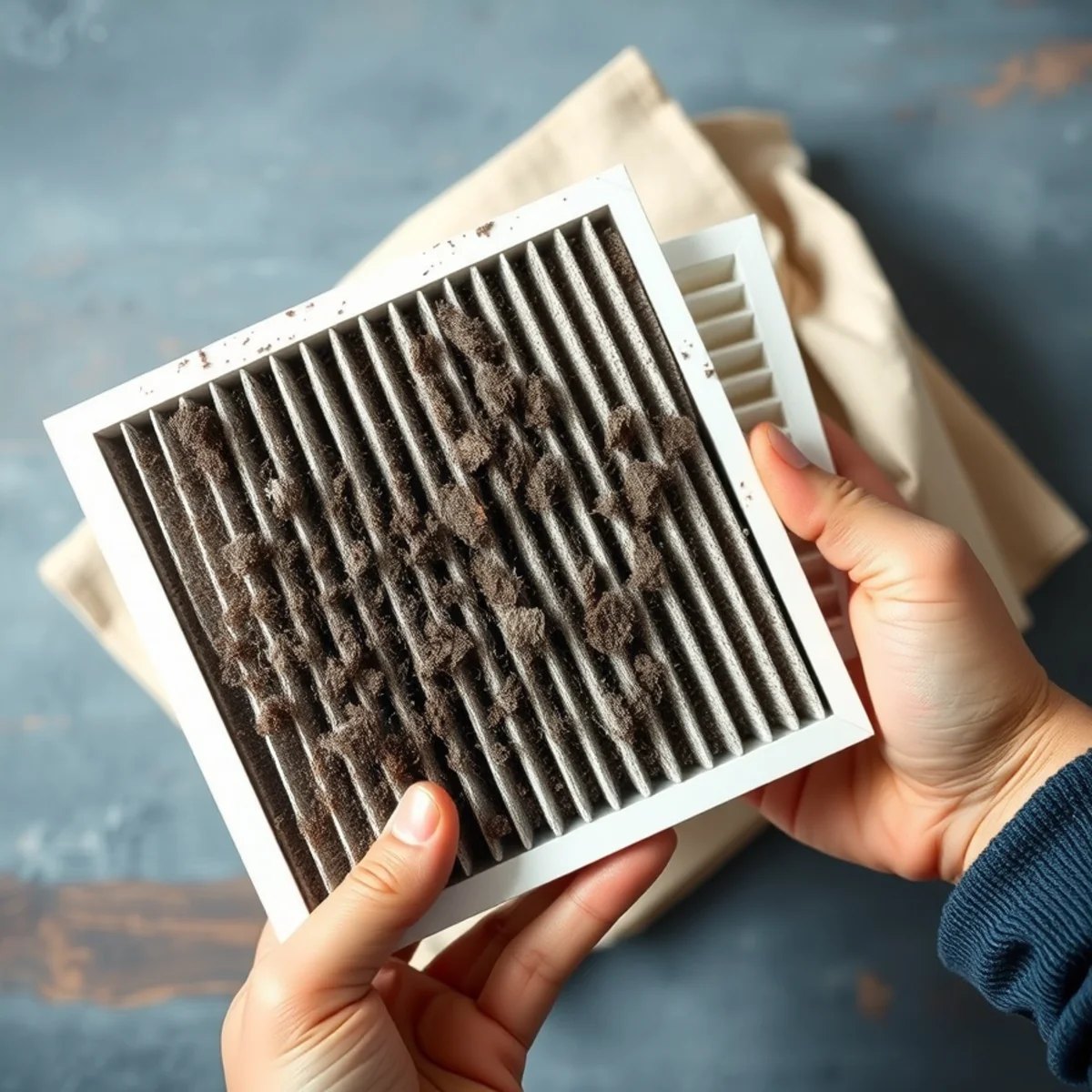
Yes, a dirty air filter can damage your HVAC system. By choking airflow, a clogged filter freezes the evaporator coil, overheats the blower motor, strains the compressor, raises energy bills, and worsens indoor air quality. Check it monthly and replace it when it looks gray and loaded, especially during Arkansas pollen season.
In this article
If you want one habit that protects your heating and cooling system more than any other, it's changing the air filter. A dirty filter is the single most common problem we find on no-cool and no-heat calls around Glenwood — and it's almost always avoidable. The filter is the cheapest part in the whole system, but when it clogs up it starts a chain reaction that ends in frozen coils, climbing power bills, and worn-out parts that cost real money to fix.
Here in Pike County the deck is stacked against your filter. Our tree-pollen season runs from mid-February clear through May, loading the air with oak, hickory, and cedar pollen. Then the humid summers arrive, your system runs for hours every day, and all that airborne dust and pollen gets pulled straight into the filter. A filter that might last three months up north can gray out in a matter of weeks down here. Let's walk through exactly what a clogged filter does to your equipment, and how to stay ahead of it.
The cheapest part with the biggest impact
Think of the air filter as the front door for every cubic foot of air your system breathes. All the air your blower moves passes through it before it ever reaches the coil or the furnace. That makes the filter a tiny, inexpensive part that sits in front of the most expensive components you own — the blower motor, the evaporator coil, the compressor, and the heat exchanger.
A fresh filter does two jobs at once:
- Protects the equipment by keeping dust, pollen, and grit off the coil and internal parts.
- Protects your air by catching particles before they recirculate through the house.
When that filter clogs, both jobs fail at the same time. And because the part is so cheap, the damage that follows is the most frustrating kind — completely preventable. We've opened up systems where a five-dollar filter that nobody changed led to a repair that took the whole afternoon. The good news is that staying on top of it is one of the easiest things a homeowner can do, and it's the foundation of any good HVAC maintenance routine.
How a dirty filter chokes airflow
Your HVAC system is designed around a specific amount of airflow. The blower is built to push a certain volume of air across the coil and through the ducts every minute. A clean filter lets that air pass with almost no resistance. A clogged one acts like a clamp on a garden hose — the blower is still trying to move the same air, but it can't get enough through the loaded filter.
That restriction is the root of nearly every problem on this list. Starve the system of airflow and you set off a domino effect:
- The coil doesn't get enough air moving across it.
- The blower motor works harder against the resistance.
- The system runs longer to reach the temperature you set.
- Conditioned air barely trickles out of your registers.
You'll often feel it before you understand it — weak airflow from the vents, rooms that won't keep up, and a system that seems to run forever without satisfying the thermostat. Almost all of that traces back to a filter doing the opposite of its job.
Not sure what filter your system needs? Just ask. Call or text Brooks at (327) 210-5999 — Killian's is family-owned, local, and open 24/7.
Frozen coils and no-cool calls
This is the one that catches people off guard, especially in summer. When a dirty filter chokes the airflow across your evaporator coil, the coil doesn't get enough warm indoor air passing over it. Refrigerant keeps absorbing heat and getting colder, but without that steady stream of warm air, the coil temperature drops below freezing. Moisture in the air condenses on it and freezes solid.
Now you've got a block of ice where your cold coil used to be. Ice is an insulator, so the system actually stops cooling — and many homeowners respond by turning the thermostat down further, which only makes it worse. By the time the AC is blowing room-temperature air on a 95-degree afternoon, the whole coil can be encased in ice.
If your AC has quit cooling and you suspect a frozen coil, turn the system off and let it thaw before you do anything else. Running it frozen risks pushing liquid refrigerant back to the compressor, which is an expensive component to replace. A frozen coil is one of the most frequent reasons behind the AC not cooling complaints we hear once the heat sets in, and a clogged filter is the most common cause of all.
Higher energy bills
Even when a dirty filter doesn't freeze your coil or stop the system outright, it quietly costs you money every single day it stays in place. A restricted filter forces your equipment to run longer and harder to deliver the same comfort. Longer run times mean more electricity, and during our long, humid Arkansas summers — when the system already runs for hours at a stretch — that adds up fast.
It's a sneaky kind of waste because the house may still feel reasonably comfortable. You don't get an obvious failure; you just get a power bill that's higher than it should be. If your cooling costs jumped this season and your habits didn't change, a clogged filter is one of the first things worth checking, right alongside a dirty outdoor coil or low refrigerant. The fix here costs less than a tank of gas, and a clean filter is the cheapest energy-saving move you can make.
Strain on the blower motor and compressor
Behind the scenes, a starved system is hard on the two motors that matter most. The blower motor has to fight against the resistance of a packed filter, which makes it run hotter. Heat is the enemy of any electric motor — over time that extra strain shortens its life and can lead to early failure. On systems with a built-in safety limit, the blower can even overheat enough to shut the whole unit down.
The compressor suffers in a different way. When the coil freezes from low airflow, liquid refrigerant that should have boiled off can slug back toward the compressor. Compressors are built to pump vapor, not liquid, and repeated doses of liquid refrigerant wear them down. The compressor is the heart of your air conditioner and one of the most costly parts to replace — so anything that protects it is worth doing. A clean filter is the simplest protection there is.
The pattern is always the same: a tiny restriction at the filter creates big stress on the parts you can't afford to lose.
Worse indoor air quality
A loaded filter doesn't just hurt the equipment — it stops doing the very job it was installed for. Once a filter is packed solid, it can't capture much more, and the dust, pollen, and debris that should be trapped either bypass it through gaps or build up on the coil and inside the ductwork instead. That gunk on a wet summer coil is exactly where mold and musty smells like to start.
In our climate the air quality side really matters. Between the long pollen season and the humidity that older lumber-mill-era frame homes and crawlspaces hold onto, the air already carries a heavier load than most. A clean filter is your first line of defense for the air your family breathes. If allergies hit hard indoors or the house smells stuffy, better filtration is worth a conversation — there's more on the indoor air quality side than a single basic filter can handle.
How often to change it in our climate
There's no one-size-fits-all answer, because it depends on the filter type, your home, whether you have pets, and how hard the system is running. But the rule of thumb from the package — "change every 90 days" — was not written for Glenwood in pollen season or July.
Here's a practical approach for our area:
- Check the filter monthly. Pull it out and hold it up to the light. If you can't see light through it, replace it.
- Change it more often in spring and summer. During the mid-February-through-May pollen stretch and the peak cooling months, many local homes go through filters faster than the box suggests.
- Replace it when it looks gray and loaded, not just when the calendar says so. The filter itself tells you the truth.
Filter changes are the heart of basic homeowner upkeep. Wherever you are around Glenwood and the surrounding Pike County area, the pollen and humidity load your filters faster than any package ever assumed.
Choosing the right filter
Not every filter that fits your return is the right filter for your system. A quality pleated filter, changed on schedule, is the sweet spot for most homes — it captures plenty of dust and pollen without strangling airflow.
The temptation is to grab the highest-rated filter on the shelf, thinking more is better. But very high-MERV filters are dense, and if your equipment wasn't designed for that much resistance, they can choke airflow much like a dirty filter does — recreating the exact problems we just walked through. The goal isn't the most restrictive filter; it's the right balance of filtration and airflow for your specific unit.
A few things to keep in mind:
- Match the size exactly — check the dimensions printed on the frame of your current filter.
- Install it facing the right way — the airflow arrow points toward the system, in the direction the air moves.
- Don't over-filter unless your system is built for it.
If you're unsure what your equipment can handle, ask. We'd rather tell you the right filter for your system than have you guess and end up with a frozen coil.
A clean filter is the cheapest insurance policy your HVAC system will ever get. It protects your coil, your blower, your compressor, your power bill, and the air your family breathes — all from a part that costs a few dollars and takes thirty seconds to swap. In our pollen-heavy, humid corner of Arkansas, it's the one habit that pays you back more than any other. Make it a monthly check, and your system will thank you all summer long.
Need a hand with your HVAC? Call or text Brooks at (327) 210-5999. Killian's Heat & Air is family-owned in Glenwood, Open 24 Hours with 24/7 emergency service, License #0852404. Request Service and we'll take care of you.
By the Killian's Heat & Air team
Reviewed by owner Brooks Killian, who has serviced and installed central heating and air across Glenwood and Pike County for 32+ years (Licensed AR HVAC #0852404). Meet the team.