
Quick Answer
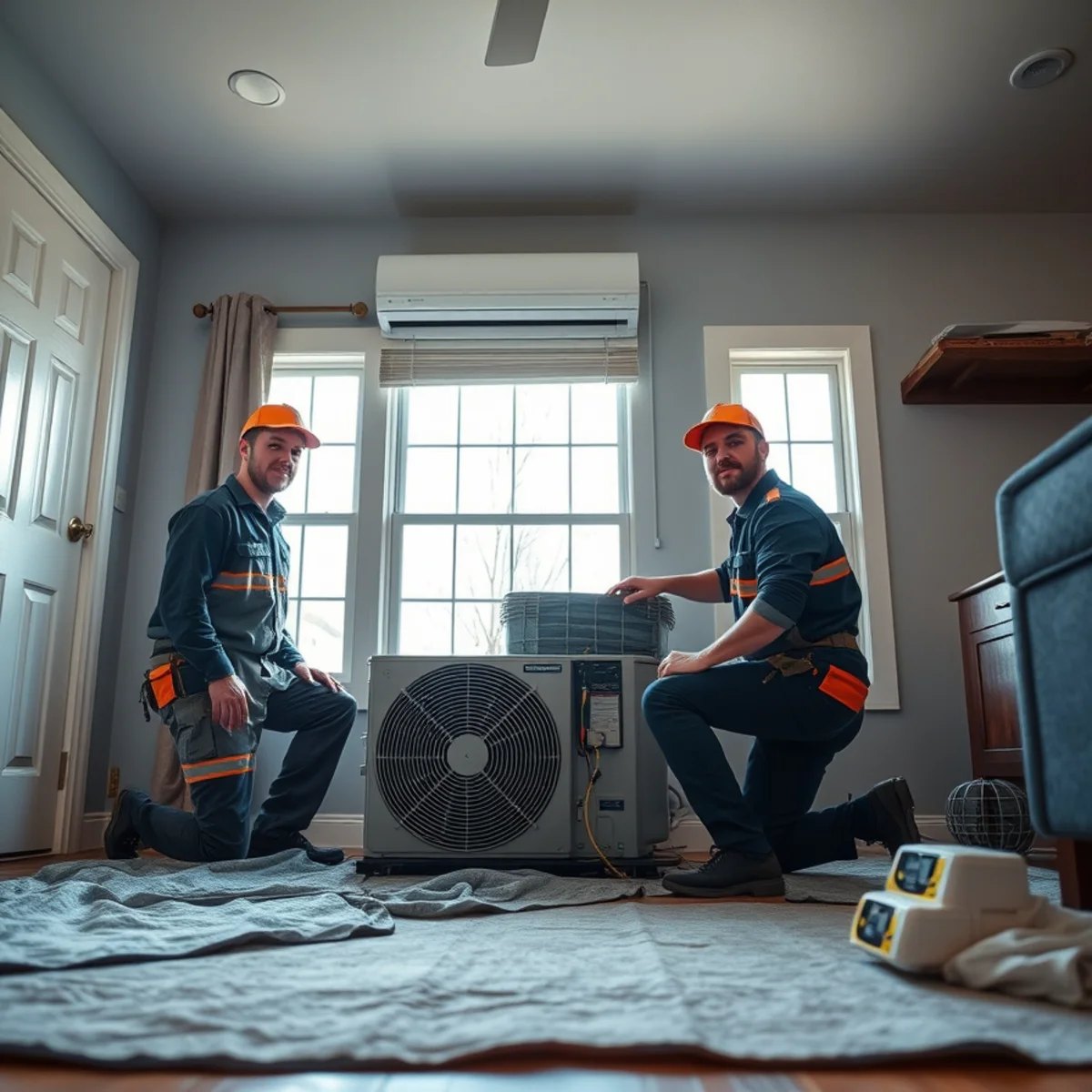
Neither central air nor a ductless mini-split is universally better. Central air suits whole-home comfort where good ductwork already exists, while mini-splits excel for additions, cabins, shops, problem rooms, zoning, and homes without ducts. Both are heat pumps that heat and cool; the right choice depends on your home's layout.
In this article
Short answer: there isn't a single winner. Central air and ductless mini-splits do the same job — keeping your home comfortable through a hot, sticky Glenwood summer and the cold snaps that roll through every winter — but they go about it in different ways. Central air is usually the right call for whole-home comfort when your house already has good ductwork. A ductless mini-split tends to win for additions, cabins, shops, and rooms that the main system just can't keep up with, or for older homes that never had ducts in the first place.
We install and service both, so we don't have a dog in the fight. Here's an honest, plain-spoken comparison so you can figure out which one actually fits your home.
How each system works
Central air uses one indoor unit (an air handler or furnace coil) and one outdoor condenser. Conditioned air travels through a network of ducts and comes out of vents in each room. One thermostat sets the temperature for the whole house. If you've lived in a typical Arkansas home, this is what you're used to.
A ductless mini-split skips the ducts entirely. An outdoor condenser connects to one or more indoor heads — usually wall-mounted, sometimes ceiling cassettes or floor units — by a small line set running through a three-inch hole in the wall. Each indoor head conditions the room it's in, and each can be set to its own temperature.
Both are heat pumps at heart, meaning they heat and cool. A mini-split is just a heat pump without the ductwork in between. That matters here, because our mild winters with the occasional dip into the low 30s are exactly the conditions heat pumps handle well.
Where central air shines
Central air is hard to beat when the bones are already there. If your home has a solid duct system in decent shape, central air gives you:
- Even, whole-home comfort from a single system and one thermostat.
- Hidden equipment — just vents and a return, no indoor heads on the wall.
- Easy whole-home filtration, since all the return air passes through one filter (a real plus during our mid-February-through-May tree-pollen season).
- Lower cost per square foot for conditioning a whole house at once.
For most existing Glenwood homes that already run on central heating and air, replacing like-for-like is the simplest, most cost-effective path. If that's your situation, our central heating and air service covers repair, replacement, and new installs.
The catch is that central air is only as good as its ductwork. In our older lumber-mill-era frame homes, ducts often run through hot attics or damp crawlspaces, and ~58 inches of rain a year is hard on anything down there. Leaky, crushed, or rodent-damaged ducts can quietly waste a third of what you're paying to cool.
Where ductless mini-splits shine
Mini-splits earn their keep in spots where central air struggles or doesn't reach at all:
- Additions and bonus rooms the existing system was never sized to handle.
- That one room that's always five degrees off — a sunroom, a converted garage, an upstairs bedroom.
- Cabins and seasonal places you don't want to heat or cool when nobody's there.
- Shops, offices, and outbuildings with no ductwork.
- Whole homes without ducts, where adding a duct system would mean tearing into walls and ceilings.
Because each indoor head runs independently, you only condition the space you're actually using. That's real efficiency, not a sales pitch. Ductless mini-splits are a genuine specialty for us — we install and service Mitsubishi Electric systems all over the area. You can read more about how we approach ductless mini-split installation and what's involved.
Got a room that's always too hot? A single mini-split head often fixes it for good. Call or text Brooks at (327) 210-5999 — Killian's is open 24/7, and we'll give you an honest read on whether ductless is the right move.
Cost, efficiency, and zoning
Up front, costs vary a lot by home, so we won't throw out numbers that won't hold up. A few honest general points instead:
- If ductwork already exists, central air is usually the lower-cost way to cool the whole house.
- If you'd have to add ductwork, a mini-split can come out ahead, because you skip the expense and mess of running ducts through walls and crawlspaces.
- For a single room or addition, one mini-split head is almost always cheaper than extending or upsizing a central system.
On efficiency, modern mini-splits run very efficiently because there's no duct loss — central systems can lose conditioned air through every seam and gap in the run, while a mini-split delivers it straight into the room. Inverter-driven compressors also ramp up and down instead of slamming on and off, which sips power and holds a steadier temperature.
The biggest comfort difference is zoning. Central air conditions the whole house to one setting. A multi-zone mini-split lets the bedrooms run cooler at night while the unused guest room stays mild. That kind of room-by-room control is tough to get from a single central system without added equipment.
Great Glenwood-area use cases (cabins, shops, additions)
This is where being local actually matters. Around here we see the same handful of situations over and over, and mini-splits are often the clean answer:
- Caddo River and Lake Greeson cabins that sit empty between visits. A mini-split lets you condition one or two rooms when you're there and shut it down when you're not — no point cooling an empty cabin through a 90-degree August week.
- Shops and pole barns out toward the Ouachita Mountains, where there's no practical way to run ducts. One outdoor unit and a head or two makes a workspace livable year-round.
- Additions and converted spaces — a sewing room, a home office, a finished garage — that the main system was never built to reach.
- Short-term rentals and second homes, where per-room control keeps guests comfortable without running the whole house wide open.
We've installed ductless systems in plenty of these across Glenwood and out in Caddo Gap, so we know how the local building stock and climate behave.
Homes without existing ductwork
Some of our older frame homes — and a good number of cabins — never had central ductwork at all. Maybe they ran window units, space heaters, or a single old floor furnace for decades.
For those homes, central air means adding a full duct system, and that's a big job: chases cut into walls, soffits dropped through ceilings, and ducts threaded through tight crawlspaces. It can be done, but it's invasive and not cheap.
A ductless mini-split is often the smarter fit. A few wall heads tied to one or two outdoor units can heat and cool the whole place with minimal disruption — no major demolition, just neat line sets and small wall penetrations. For a lot of older Glenwood homes, that's the difference between a weekend install and a multi-week renovation. If you're weighing this against a full central system, our notes on sizing a system to your home are worth a look too.
Comfort, humidity, and noise
In our climate, humidity is half the battle. A cooling system that drops the temperature but leaves the air clammy hasn't really done its job.
Mini-splits tend to dehumidify well because their inverter compressors run long, steady, low-speed cycles instead of short bursts — and longer run times pull more moisture out of the air. Many also have a dedicated dry mode for those muggy, overcast days when it's not blazing hot but the air feels like soup.
Central air dehumidifies well too, as long as it's right-sized. An oversized central unit cools the air fast, shuts off before it removes much moisture, and leaves you cold and sticky — a common complaint in Arkansas homes. Correct sizing and good ductwork matter as much as the equipment itself.
On noise, the indoor head of a mini-split is genuinely quiet, often little more than a soft whoosh. Central air is quiet inside too, since the loud part lives outdoors — though you'll hear air moving through the vents. Neither one is a problem for most folks; it's mostly personal preference.
Which is right for your home?
Here's the quick gut check:
- Choose central air if you already have decent ductwork and want even, whole-home comfort with hidden equipment and simple whole-home filtration.
- Choose a ductless mini-split if you're conditioning an addition, cabin, shop, or a problem room — or if your home has no ductwork and you'd rather skip the demolition.
- Consider both — plenty of homeowners keep their central system and add a mini-split to handle the one space it can't, like a hot bonus room or a sunroom.
The best answer depends on your home's layout, ductwork, and how you actually live in it. That's exactly the kind of thing we'll walk through with you in person, no pressure and no upsell — if central air is the right call, that's what we'll tell you. You can also explore our AC installation options if you're leaning toward a central replacement.
Not sure which way to go? Call or text Brooks Killian at (327) 210-5999. Killian's Heat & Air is family-owned, based right here in Glenwood, and Open 24 Hours with 24/7 emergency service — License #0852404. We'll give you a straight answer about what fits your home and budget. Request Service and we'll take it from there.
By the Killian's Heat & Air team
Reviewed by owner Brooks Killian, who has serviced and installed central heating and air across Glenwood and Pike County for 32+ years (Licensed AR HVAC #0852404). Meet the team.