
Quick Answer
The right HVAC size is whatever a proper load calculation says your home needs, not the biggest unit or a copy of the old one. It weighs square footage, insulation, windows, sun exposure, ductwork, and our humid climate. Oversized systems short-cycle and leave homes cold but clammy; right-sizing controls both temperature and humidity.
In this article
- Why size matters more than you'd think
- The problem with an oversized system (especially here)
- The problem with an undersized system
- What a real load calculation looks at
- Why square footage alone isn't enough
- Older Glenwood homes, crawlspaces, and additions
- Ductwork is part of the equation
- How we size a system for your home
The honest answer most homeowners don't expect: the right size is whatever a real load calculation says your home needs — not the biggest unit you can afford, and not necessarily the same size as the one being replaced. Here in Glenwood, with our hot, humid summers and the moisture our climate throws at a house, getting the size right matters more than the brand on the box. A system that's too big actually cools worse than a properly sized one. Let's walk through why, and what goes into doing it correctly.
Why size matters more than you'd think
HVAC "size" refers to capacity — how much heating and cooling a system can deliver, usually measured in tons (cooling) and BTUs. It's tempting to think of it like horsepower: more is better, gives you headroom, no downside. With heating and cooling, that instinct is backwards.
A right-sized system is matched to how much heat your home actually gains in summer and loses in winter. When the match is good, the system runs in long, steady cycles that do two jobs at once: drop the temperature and pull moisture out of the air. When the match is off — in either direction — comfort, efficiency, humidity control, and equipment life all suffer.
Key takeaway: the goal isn't the most powerful system. It's the system that matches your home's real load, so it runs steadily instead of in bursts.
The problem with an oversized system (especially here)
This is the mistake we see most, and it's the one that bites hardest in Arkansas. An oversized air conditioner blasts the air to temperature so fast that it shuts off after only a few minutes — before it has had time to wring the humidity out of your home. The thermostat reads 74, the system stops, and you're left with a house that's cold and clammy at the same time. That sticky, damp feeling on a "cool" day is almost always an oversizing problem.
Because the temperature drifts back up quickly, an oversized unit then kicks on again a few minutes later. That stop-start pattern is called short cycling, and it carries real costs:
- Poor humidity control — the single biggest comfort issue in our humid-subtropical summers, where dew points stay high for months.
- Higher wear — compressors and motors take the most strain at startup, so frequent cycling shortens equipment life.
- Uneven temperatures — short runs don't move conditioned air long enough to even out the far rooms.
- No real efficiency gain — a bigger unit doesn't save energy; the constant cycling usually costs you more.
In a drier northern climate you might get away with some oversizing. Here, with 90s heat and heavy moisture loads, an oversized system leaves your home feeling worse, not better.
Need a hand? Call or text Brooks at (327) 210-5999 — Killian's is open 24/7. If you're replacing a system, don't just match the old size; let us calculate what your home actually needs.
The problem with an undersized system
Undersizing is less common but has its own failure mode. A system that's too small simply can't keep up when the weather is at its worst. On the hottest, most humid July afternoons, it runs and runs and never quite reaches the thermostat setting. You'll notice:
- The system running nearly nonstop on extreme days and still falling behind.
- Rooms farthest from the air handler staying warm and stuffy.
- Higher bills from a unit that never gets to rest.
- Faster wear, because constant running is hard on the equipment.
There's a narrow upside — an undersized unit usually dehumidifies fine, because it runs long cycles. But it can't deliver the comfort you paid for during a cold snap or a heat wave, which is exactly when you need it most.
Key takeaway: oversized leaves you cold and clammy; undersized leaves you hot and behind. Right-sized is the only setup that handles both temperature and humidity through a full Arkansas summer.
What a real load calculation looks at
The industry standard for sizing residential systems is a Manual J load calculation. It's a room-by-room estimate of how much heat your home gains and loses, and it accounts for far more than floor area. A proper load calc weighs:
- Square footage and ceiling height — volume, not just floor space.
- Insulation levels in walls, attic, and floors.
- Windows — number, size, type, and which direction they face.
- Sun exposure and shading — a tree-shaded north side behaves nothing like a west wall in full afternoon sun.
- Air sealing and leakage — how much outside air sneaks in.
- Local climate data — our specific design temperatures and humidity, not a national average.
- Ductwork — its condition, size, and layout.
Run those numbers and you get a capacity target that fits your home. Skip them, and you're guessing.
Why square footage alone isn't enough
You'll hear rules of thumb like "one ton per 500 or 600 square feet." They're easy, and they're often wrong — sometimes badly. Two homes with identical square footage can need very different equipment.
Picture a tight, well-insulated newer home with good windows next to an older frame house with original single-pane windows, thin wall insulation, and a leaky crawlspace. Same floor area, completely different loads. The square-footage shortcut would put the same unit in both, which means one of them ends up wrong. That's how homes get saddled with an oversized system that short-cycles, or an undersized one that can't keep up.
Square footage is a starting point. It is not an answer.
Older Glenwood homes, crawlspaces, and additions
A lot of homes around Glenwood and Pike County are older lumber-mill-era frame houses sitting over crawlspaces — and those details change the math. With our roughly 58 inches of rain a year, crawlspace moisture and humid air migrating up through the floor add to the load your system has to manage. Original windows and modest insulation push the cooling and heating numbers around, too.
Additions and remodels are another big one. If a previous owner finished a bonus room, enclosed a porch, or bumped out the back of the house, the original system was never sized for that extra space — which is often why one room stays miserable no matter where you set the thermostat. Cabins and second homes near the Caddo River or up toward Lake Greeson have their own quirks, since they're often seasonal and built differently than a year-round house.
For spaces a central system struggles to reach — a hot addition, a sunroom, a shop — a ductless mini-split can be a smarter answer than upsizing the whole system. Sizing those correctly matters just as much, and it's a genuine specialty of ours. Either way, the work starts with measuring the real space, not assuming.
Ductwork is part of the equation
Here's a piece homeowners often miss: even a perfectly sized unit can't perform if the ductwork can't carry the air. Ducts that are too small, crushed, disconnected, leaking into the crawlspace, or chewed up by rodents will choke airflow and leave rooms uneven — and they make humidity harder to control.
When we size a system, we look at the duct system right along with it. Sometimes the real fix isn't a bigger unit at all; it's repairing or resizing the ductwork so the system you have — or the new one you're installing — can actually do its job. Sizing the equipment and the ducts together is the only way to get steady airflow to every room.
How we size a system for your home
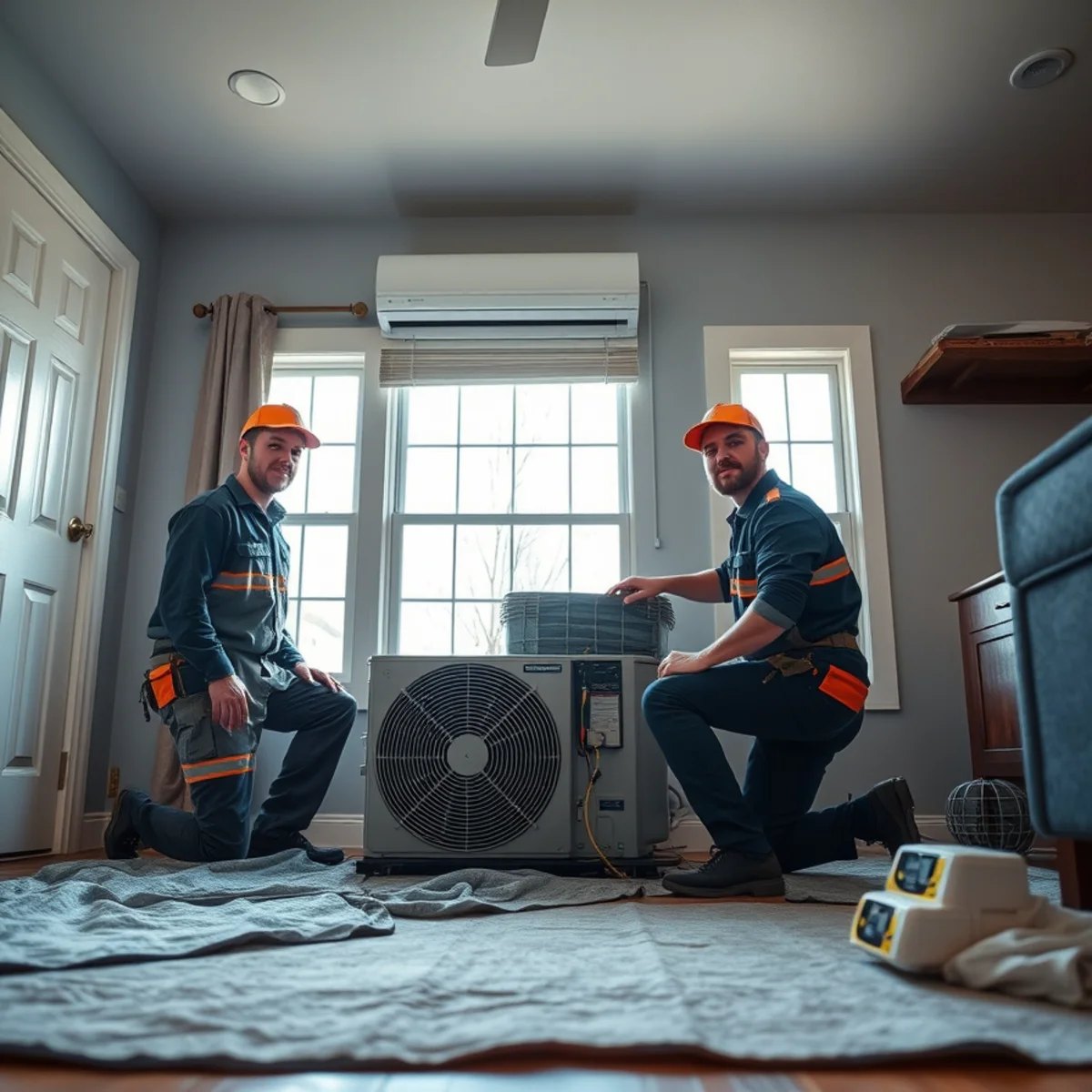
When you're looking at a new HVAC installation or AC installation, here's the approach we take across Glenwood and the surrounding area. We come out, look at the actual home — square footage, ceiling heights, insulation, windows, sun exposure, the crawlspace, any additions — and we factor in our local climate and humidity. We check the ductwork. Then we run the numbers rather than copying the size of the old unit, because that old unit may well have been wrong, or your home may have changed since it went in.
The result is a system matched to your home: one that runs in steady cycles, keeps both temperature and humidity comfortable, and isn't working itself to death. No guessing, no "bigger to be safe," and no high-pressure upsell — just the right size for the way you actually live.
Bottom line: the best HVAC system for your home is the one that's correctly sized for your home — and the only way to know that size is to measure and calculate it, not to estimate from floor area or match what's already there.
Replacing or installing a system? Let's size it right. Call or text Brooks Killian and his team at (327) 210-5999 for a straight, honest assessment and a free estimate. We're Open 24 Hours with 24/7 emergency service across Glenwood and Pike County. Request Service and we'll calculate exactly what your home needs.
By the Killian's Heat & Air team
Reviewed by owner Brooks Killian, who has serviced and installed central heating and air across Glenwood and Pike County for 32+ years (Licensed AR HVAC #0852404). Meet the team.